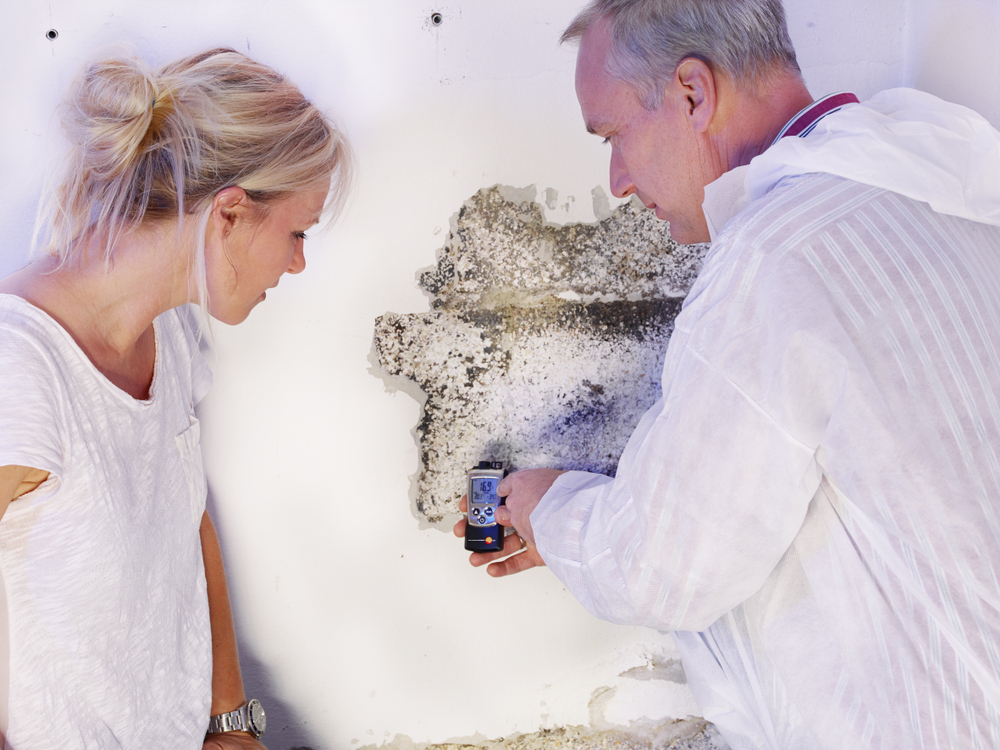

Most people don’t think about mold until they can see it. By then, they’re already behind.
That’s not a criticism — it’s just how mold works. It grows in places you don’t casually look: behind drywall, under flooring, inside wall cavities, in the corners of crawl spaces. It can be quietly colonizing a section of your home for months before a smell gives it away, or before a patch appears on a surface. And in the meantime, the people living in that home are breathing air that carries its by products every single day.
The phrase “healthy home” gets used a lot, sometimes loosely. But there’s real substance behind it. The air inside your home is, in most cases, more polluted than the air outside — and mold is one of the primary reasons why. Understanding how to detect mold early and address it properly isn’t just a home maintenance topic. It’s a health topic.
What Mold Actually Is — and Why It Matters
Mold is a type of fungus. There are thousands of species, and they exist everywhere in the natural world — breaking down organic matter, cycling nutrients, doing genuinely important ecological work. The problem isn’t mold’s existence. It’s mold’s presence inside buildings, where it breaks down the organic materials your home is made of and releases compounds into the air you breathe.
When mold grows indoors, it produces two things that affect human health. The first is spores — microscopic reproductive particles that become airborne and, when inhaled in sufficient quantities, irritate the respiratory system. The second is microbial volatile organic compounds, or MVOCs — the chemical byproducts of mold metabolism. These are what create that distinctive musty smell, and they’re associated with headaches, fatigue, brain fog, and respiratory symptoms even in people who don’t consider themselves sensitive to mold.
Some species, like Stachybotrys chartarum — the “black mold” that gets discussed a lot in the media — produce mycotoxins that are more potent and carry more serious health implications. But it’s worth noting that even more common mold species cause real problems for many people, particularly children, the elderly, and anyone with asthma, allergies, or a compromised immune system. You don’t need the scariest species for mold to be a genuine concern.
The Conditions That Make Your Home Vulnerable
Mold doesn’t appear randomly. It shows up where conditions allow it to. Understanding those conditions is the first layer of effective mold management.
Moisture is the primary driver. Mold spores are present in virtually every home — they come in through windows, on clothing, on pets. What stops them from growing is the absence of sufficient moisture. Give them a wet surface and something organic to feed on — which, in a typical home, is almost everywhere — and they’ll establish themselves within 24 to 48 hours.
The most common sources of indoor moisture that lead to mold problems are: plumbing leaks (both visible and hidden), roof or window leaks, condensation on cold surfaces, poor bathroom and kitchen ventilation, flooding or water intrusion events, and chronically high indoor humidity. Humidity above 60% is enough to sustain mold growth even without a visible leak. This matters in climates with humid summers, in tightly sealed modern homes where moisture has nowhere to escape, and in basements and crawl spaces where ground moisture is a constant factor.
Temperature also plays a role. Most mold species thrive between roughly 60°F and 80°F — which, conveniently, is also the range most people keep their homes in. Cold slows mold growth but doesn’t kill it, which is why mold found in a dormant state can reactivate when conditions change.
Detection: Learning to Read the Signs
Effective mold detection starts with being observant — really observant, in a systematic way rather than just glancing around occasionally.
Smell before you see. A persistent musty or earthy odor, especially in a specific room or area, is often the first indicator of hidden mold growth. If a room consistently smells musty regardless of how much you clean or ventilate it, something is producing that odor behind a surface. Follow the smell. It narrows down where to look.
Look beyond the obvious surfaces. Most people check visible surfaces and call it done. But mold’s favorite hiding places are the ones people don’t look at routinely: the underside of bathroom cabinets, the back wall of closets on exterior walls, the areas behind large appliances, under sinks, around window frames, along the base of walls in basements. Get a flashlight and actually look at these spots.
Watch for visual cues beyond black spots. Mold isn’t always the dramatic black spreading colony that gets photographed in alarming articles. It can be white and powdery, green and fuzzy, gray, orange, or various shades of brown. Discoloration on walls or ceilings — particularly in areas that have ever been damp — warrants investigation. Paint that bubbles, peels, or appears to be separating from the wall often indicates moisture behind it.
Pay attention to health patterns. This one is underappreciated. If people in your household consistently experience allergy-like symptoms — sneezing, runny nose, itchy eyes, throat irritation, headaches — that improve noticeably when they leave the house, that’s meaningful data. It doesn’t definitively diagnose mold, but it’s a signal worth taking seriously. Children and elderly family members often show symptoms before healthy adults do.
Monitor humidity consistently. A digital hygrometer costs very little and tells you a great deal. Keep one in areas prone to moisture — the bedroom, bathroom, basement — and check it regularly. Consistent readings above 55–60% in any area of your home indicate conditions favorable to mold growth even if you haven’t found any yet.
Testing: When and How to Know for Sure
Visual inspection and smell can get you far, but sometimes you need data. There are a few ways to get it.
DIY mold test kits are available at hardware stores and online. Most involve placing a petri dish in the suspected area for a set period and then observing whether cultures grow. These kits can confirm that mold spores are present in an area, but they have significant limitations — they can’t tell you the species, the concentration, or whether levels are elevated above what’s normal background. They’re better than nothing, but not particularly precise.
Air quality testing by a professional is considerably more informative. A certified industrial hygienist or mold inspector can conduct air sampling that measures actual spore counts and identifies species present. This is compared against outdoor baseline samples to determine whether indoor levels are elevated. This kind of testing is particularly valuable when symptoms are present but no visible mold has been found, when you’re buying a home and want a thorough assessment, or when you want to verify that remediation was successful.
Surface sampling — swabbing or tape-lifting from a suspected area — can confirm whether what you’re seeing is actually mold and what species it is. This matters particularly when the visual isn’t clearly identifiable, or when you need documentation for insurance or legal purposes.
Moisture meters are arguably the most practically useful tool for ongoing detection. By measuring the moisture content of walls, floors, and ceilings, you can identify areas that are holding more moisture than they should — often before mold has had a chance to establish itself visually. A moisture reading elevated above baseline in a wall that looks perfectly normal is a reason to investigate further.
One thing to know about professional inspectors: the quality and approach vary significantly. Look for inspectors certified through recognized bodies like the IICRC (Institute of Inspection Cleaning and Restoration Certification) or with credentials from the American Council for Accredited Certification (ACAC). A good inspector will do more than a visual walkthrough — they’ll use moisture meters, thermal imaging, and air sampling to build a complete picture.
Remediation: What It Actually Involves
Remediation is a word that sounds clinical and technical, and the process can be — but the underlying logic is straightforward. The goal is to remove mold from the building, eliminate or control the conditions that allowed it to grow, and restore air quality to safe levels. Everything in a proper remediation plan serves those three objectives.
Containment comes first. Before any mold removal begins, the affected area needs to be isolated so that spores disturbed during removal don’t spread to other parts of the home. For small DIY projects this might mean closing doors and covering vents. For professional remediation, it typically means plastic sheeting sealed with tape, creating negative air pressure in the contained area so air moves in rather than out, and air scrubbers running continuously to capture what gets airborne during the process.
Personal protection matters. Working around mold without adequate protection is a bad idea even for healthy adults. At minimum, wear an N95 respirator, gloves, and eye protection. For larger or more contaminated areas, a full-face respirator and Tyvek suit are appropriate. If you have respiratory sensitivities, allergies, or asthma — sit out any hands-on remediation work entirely and let someone else handle it.
Porous materials usually need to go. Mold grows into porous materials rather than just on their surface. Drywall, insulation, carpet and padding, ceiling tiles — these typically cannot be successfully cleaned. The mold’s root structure (mycelium) penetrates below the surface, and cleaning the surface doesn’t reach it. Removal and replacement is the correct approach for porous materials with visible mold growth, particularly if they’ve been wet for more than a day or two.
Non-porous surfaces can be cleaned. Concrete, tile, glass, metal, and sealed hard surfaces can be cleaned of mold effectively with appropriate antimicrobial products. The surface needs to be scrubbed thoroughly, not just sprayed. Products containing hydrogen peroxide, quaternary ammonium compounds, or borax are commonly used and generally effective. Bleach does kill mold on hard non-porous surfaces but doesn’t penetrate — and it’s often overused on porous materials where it gives the visual impression of success without actually solving the problem.
HEPA vacuuming before and after. Before removing materials and after cleaning, HEPA vacuuming of all affected surfaces removes settled spores that would otherwise become airborne during or after the process. A regular vacuum without HEPA filtration will pick up spores and immediately redistribute them through its exhaust — the opposite of helpful.
Fix the moisture source. This is the most important step and the one that determines whether remediation actually solves the problem or just delays it. Removing mold and leaving the moisture source intact is guaranteed to result in recurrence. Every remediation project should include identifying and resolving whatever caused the moisture in the first place — whether that’s a plumbing repair, improved ventilation, waterproofing, vapor barriers, or humidity management.
The DIY vs. Professional Decision
People ask about this a lot, and the honest answer is that it depends on scope and circumstances.
The EPA’s guidance draws the line at roughly 10 square feet of visible mold growth. Below that, a careful DIY approach with proper protection and technique is considered reasonable for healthy adults working with non-toxic mold species on removable materials. Above that threshold, or in any situation involving Category 3 water contamination (sewage, floodwater), or when mold is present in HVAC systems, or when occupants have significant health vulnerabilities — professional remediation is the appropriate choice.
Beyond area size, consider these factors: Do you have the protective equipment to work safely? Do you have the tools to verify that drying and remediation were actually successful (moisture meters, air scrubbers)? Can you identify and fix the underlying moisture source? If the honest answer to any of those is no, the math on hiring professionals changes pretty quickly.
Professional remediation costs vary widely by region, project size, and what’s involved — but a job done correctly once is considerably less expensive than a DIY attempt that leaves residual mold that causes health problems and requires professional intervention anyway.
After Remediation: Verification and Prevention
A remediation job isn’t finished when the visible mold is gone and the work area is cleaned up. There are two things left to do.
First, verify. Post-remediation testing — air sampling conducted after the work is complete — provides objective confirmation that spore counts have returned to normal levels. If a professional did the remediation, this step is often handled by an independent industrial hygienist rather than the remediation company itself, which avoids any conflict of interest. If you did the work yourself, a post-remediation air quality test from a certified lab gives you confidence that the job was thorough.
Second, establish prevention habits that hold. The reason mold recurs in so many homes isn’t that remediation was unsuccessful — it’s that the underlying conditions weren’t sustainably addressed. Low humidity (maintained below 50% consistently), prompt attention to any new leaks or moisture, adequate ventilation in high-moisture areas, and routine inspection of the spots where mold tends to hide — these habits are what actually keep a home mold-free over time rather than just mold-remediated once.
The Bigger Picture
A healthy home isn’t an accident. It doesn’t happen because nothing bad has occurred yet — it happens because the people living in it pay attention and respond to problems before they become entrenched.
Mold is, in many ways, a useful indicator species. When it appears, it’s telling you something about moisture, ventilation, or structural integrity that deserves to be heard. Treating the symptom without listening to what it’s saying is how small problems become large ones.
For more information about Mold Remediation Union NJ contact Us:
Business Name: Green Guard Mold Remediation Of Union
Address: 1620 US-22, Union, NJ 07083, United States
Phone: +1 908-263-1697
Email: info@greenguardmoldremediationunion.com
Website: https://greenguardmoldremediationunion.com/