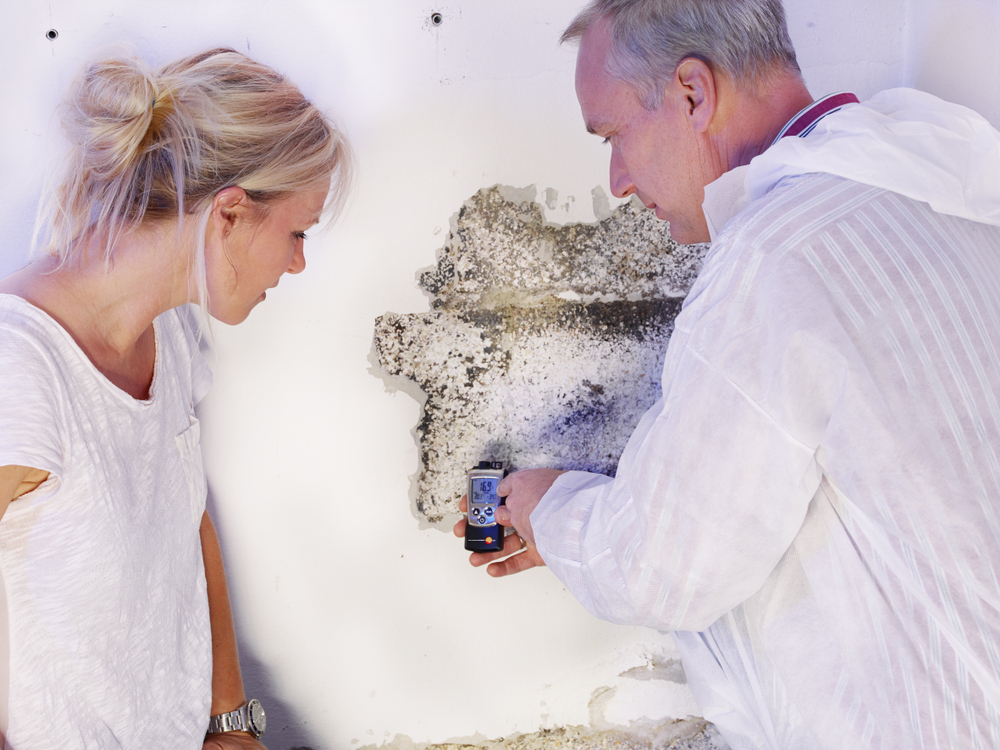

Most people think of water damage as a structural problem — warped floors, stained ceilings, peeling paint. And yes, all of that is true. But what often goes unnoticed, at least in the early days, is what’s happening inside the walls, under the floors, and in the air you’re breathing. Water damage doesn’t just hurt your home. It can quietly make the people living in it sick.
I’ve spoken with homeowners who thought a small leak under the kitchen sink was “no big deal.” They dried it up, maybe tossed a few paper towels under there, and moved on. Weeks later, a family member started having persistent headaches. Another developed a cough that wouldn’t quit. It wasn’t until a contractor pulled out the cabinet that they found the source: a fuzzy black growth that had taken over the back wall.
Water damage and unhealthy indoor conditions are far more connected than most of us realize.To prevent all such issues from mold it is necessary to have a regular mold inspection/detection of your premises.
The Moisture Problem Starts Sooner Than You Think
Here’s something that surprises a lot of people: mold can begin to grow within 24 to 48 hours of a water intrusion event. That’s not days or weeks — it’s less than two days. And by the time you can actually see it or smell it, the colony is already well established.
When water soaks into drywall, insulation, wood framing, or carpet padding, it creates exactly the conditions that mold spores — which are naturally present in the air all around us — need to settle in and multiply. Warmth, darkness, and organic material to feed on. Your walls, essentially, provide a perfect habitat.
The tricky part is that a lot of this happens out of sight. Moisture trapped behind tiles, inside wall cavities, or beneath flooring doesn’t evaporate the way a puddle on a hard surface does. It lingers. And while it lingers, it works.
Mold: The Most Talked-About, and Misunderstood, Threat
Mention water damage and mold in the same sentence, and most people’s minds go straight to “black mold” — specifically Stachybotrys chartarum, the variety that gets the most media attention. And while that particular species does produce mycotoxins that can be harmful, fixating on it alone misses the bigger picture.
Dozens of mold species can grow in a water-damaged home, and many of them affect air quality and health regardless of their color. Cladosporium, Penicillium, Aspergillus — these are far more common and can trigger a range of symptoms in sensitive individuals, including:
- Nasal and sinus congestion
- Eye irritation and redness
- Skin rashes or irritation
- Persistent coughing or wheezing
- Worsening of asthma symptoms
- Fatigue and difficulty concentrating
For people who are already immunocompromised, elderly, or very young, the risks are amplified. But even healthy adults can experience symptoms when mold concentrations in indoor air are high enough.
What makes it especially frustrating is that mold symptoms often masquerade as allergies or a cold. People spend weeks treating the wrong thing.
Dust Mites and Humidity: A Less Obvious Connection
Mold tends to get all the attention, but it’s not the only biological contaminant that water damage encourages. Dust mites — those microscopic creatures that live in bedding, upholstery, and carpet — thrive in humid environments. When water damage raises the relative humidity in a home above 50 to 60 percent, it creates ideal conditions for their populations to explode.
Dust mite waste is one of the most common indoor allergens. People who already struggle with allergies or asthma often find that their symptoms spike after flooding or prolonged moisture issues in their homes, even after the visible water is long gone.
The humidity itself is also a problem. When indoor humidity stays elevated, people often report feeling congested, having trouble sleeping, and experiencing a general sense of stuffiness that’s hard to explain. Your body simply isn’t designed to spend hours in air that’s perpetually thick with moisture.
Volatile Organic Compounds and Bacterial Growth
Here’s where things get a bit more complex, and a bit less talked about.
When certain building materials — drywall, wood, adhesives, insulation — become wet and begin to break down, they can release volatile organic compounds, or VOCs, into the air. These are chemical compounds that evaporate at room temperature and can cause irritation to the eyes, nose, and throat, as well as headaches and dizziness in higher concentrations.
This is separate from any off-gassing that may have already been happening from new materials. Water damage accelerates the breakdown process and can release compounds that would otherwise stay locked in the material for years.
Bacterial contamination is another concern, particularly with flooding. Water that comes from outside — storm flooding, sewage backup, or even groundwater intrusion — carries bacteria with it. When that water soaks into porous materials and those materials aren’t properly cleaned or removed, bacteria can persist long after the surface appears dry. The smell people describe as “musty” or “earthy” after flooding is often a combination of mold and bacterial activity — your nose is telling you something your eyes can’t see.
The HVAC System: A Hidden Distributor
One thing that catches homeowners off guard is the role that heating and cooling systems play in spreading contamination through a home.
If moisture reaches your HVAC system — whether through flooding, a leaking duct, or condensation issues that weren’t properly addressed — the system can become a vehicle for distributing mold spores and other contaminants to every room in the house. Each time the system runs, it circulates air through the contaminated area and pushes it into living spaces.
This is why remediation professionals often recommend testing and cleaning HVAC systems after significant water events, even if the system itself didn’t appear to be directly affected. A clean system in a home with hidden moisture issues can quickly become part of the problem.
What This Actually Looks Like Day to Day
The health effects of water-damaged buildings tend to be cumulative and gradual rather than sudden. You might notice that you sleep better when you’re away from home for a few days. Your children’s allergy symptoms might flare during certain seasons and you can’t figure out why. Someone in the household might develop a cough that doctors can’t quite explain.
These patterns are often dismissed or attributed to other causes. And sometimes they are other causes. But if there’s been any water event in your home — a leak, flooding, high humidity over a long period, condensation on windows, or even just a persistent damp smell in certain rooms — it’s worth taking seriously and investigating.
What to Do If You Suspect a Problem
The single most important thing is not to wait and see. The longer moisture remains in a building, the more entrenched the biological growth becomes, and the harder and more expensive it is to address.
A few practical steps:
Address the source first. No amount of drying or remediation will solve the problem permanently if the water is still coming in. Leaks, drainage issues, or condensation problems need to be fixed before anything else.
Dry thoroughly and quickly. Professional water damage restoration companies use industrial-grade equipment — air movers, dehumidifiers, moisture meters — because ordinary fans simply aren’t enough. If the affected area is more than a small surface patch, it’s worth bringing in professionals.
Don’t assume “it looks dry” means “it is dry.” Surface dryness and actual material moisture content are different things. Materials like drywall and subfloor can appear dry to the touch while holding significant moisture deeper in.
Consider air quality testing. If health symptoms are present and a cause isn’t obvious, indoor air quality testing can help identify elevated mold spore counts, VOCs, or other contaminants.
When in doubt, remove and replace. Porous materials that have been saturated and not quickly dried — especially drywall, carpet, and insulation — are often better replaced than remediated. The cost feels high upfront, but it’s usually lower than the ongoing health costs of trying to save material that’s already compromised.
A Final Thought
Water is remarkably good at finding its way in, and remarkably stubborn about leaving once it does. The damage it causes isn’t always visible, and the health effects it triggers aren’t always immediate. That combination — hidden damage, delayed symptoms — is exactly why water damage tends to be underestimated until it becomes impossible to ignore.
If your home has experienced any form of water intrusion, treating it as a serious matter from the start is the most protective thing you can do — both for the structure and for the people inside it.
For more information about Unhealthy Indoor Conditions, please contact:
Business Name: Green Guard Mold Remediation Hackensack
Address: 60 Court St, Hackensack, NJ 07601, United States
Phone: +1 551-324-9713
Email: info@greenguardmoldhackensack.com
Website: https://greenguardmoldhackensack.com/